
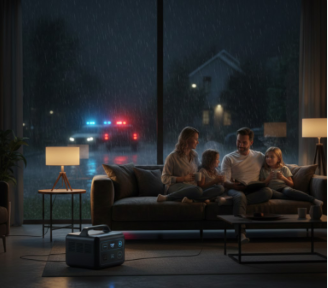
Power outages never arrive at a convenient moment. They slip in quietly at first – a blink of the lights, the router clicking off – then suddenly everything feels exposed. The house goes still. The questions start stacking up. How long will this last? Did the fridge shut off? What about tonight?
For years, the answer was supposed to be a gas generator. Loud. Smelly. Temperamental. It solved one problem while creating three more.
A different kind of backup has been taking over, one that doesn’t announce itself, doesn’t rattle the walls, and doesn’t fill the air with fumes. Quiet portable power stations have changed the emotional texture of power outages – and for homeowners who value calm as much as capability, that change is everything.
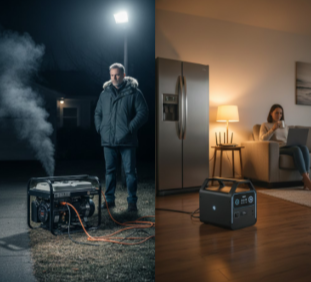
Why Loud Backup Power Fell Out of Favor
Noise Isn’t Just Annoying — It Rewires the Experience of an Outage
Sound hits the nervous system before logic has a chance to weigh in. A droning engine in the driveway doesn’t just interrupt sleep; it keeps the brain on alert, cycling through stress responses when you need rest the most.
Quiet portable power stations operate at sound levels closer to a whisper than a machine. In real terms, that means you can sit in the living room, go to bed, or hold a conversation without raising your voice. During an outage, silence becomes a form of stability. The house feels intact.
Gas Brings Complications You Don’t Notice Until You’re Living With Them
Fuel-powered generators come with an invisible checklist of stressors:
Carbon monoxide concerns.
Strict outdoor-only placement.
Fuel storage and rotation.
Cold starts that fail at the worst possible time.
Regular maintenance that’s easy to forget – until it matters.
Quiet portable power stations sidestep all of it. No combustion. No fumes. No safety gymnastics. Plug them in, power them up, and let them do their job quietly in the background.
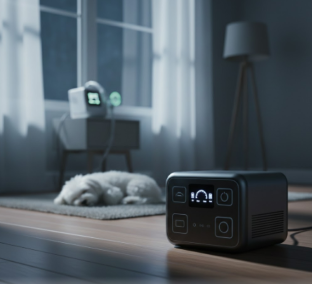
What a Quiet Portable Power Station Really Is
This isn’t a generator with better insulation. It’s a different philosophy of backup power.
The Technology That Makes Silence Possible
At the center is a lithium battery system – often LiFePO4 for its stability and long lifespan – paired with a pure sine wave inverter that delivers clean, appliance-safe electricity. There’s no engine revving, no exhaust cycle, no sudden spikes of sound.
Cooling, when needed, is handled by slow, efficient fans or passive thermal design. The result is power that feels invisible.
Why “Portable” Matters at Home
Portability isn’t about carrying it into the woods. It’s about freedom inside your house.
You can move it room to room.
Use it safely indoors.
Set it up without permits or professional installs.
Deploy it the moment the grid goes down.
For homeowners, that flexibility turns backup power into something personal – something you control directly.

How Quiet Portable Power Stations Keep a Home Running
What They Power Without Drama
A well-sized quiet portable power station can comfortably handle the essentials:
Refrigerators and freezers.
Wi-Fi routers and modems.
Lights, lamps, and charging stations.
Laptops, TVs, and small appliances.
Medical devices like CPAP machines.
Because the power output is stable and clean, sensitive electronics are often safer than they would be on a gas generator.
Runtime Is About Planning, Not Guessing
Confidence during an outage comes from understanding a few simple numbers:
Battery capacity, measured in watt-hours.
Continuous wattage, not just peak claims.
The real-world load of the devices you care about most.
Quiet portable power stations are designed for steady, overnight operation. They don’t need babysitting. They don’t demand refueling. They just keep going.
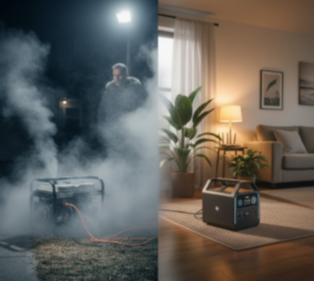
Quiet Portable Power Stations vs Gas Generators
Sound and Sleep
Gas generators live in the 60–90 dB range. That’s conversation-to-lawnmower territory. Quiet power stations stay closer to background noise. The difference shows up most at night, when one keeps you awake and the other fades into the room.
Safety and Indoor Use
Gas generators belong outside, far from doors and windows. Quiet portable power stations are built for indoor use, with no emissions and no air-quality tradeoffs.
Maintenance and Reliability
Gas engines need attention – oil, fuel, test runs. Battery systems ask for very little. Charge them. Store them. Use them.
Cost Over Time
The upfront price of a generator can look appealing until fuel costs, repairs, and shortened lifespan enter the picture. Quiet portable power stations tend to reward patience, paying off slowly and predictably over years of use.
The Specs That Actually Matter
Continuous Power Beats Flashy Peaks
Ignore marketing that leans too hard on surge wattage. What matters is what the system can run continuously, hour after hour, when the outage stretches on.
Battery Chemistry as a Trust Signal
LiFePO4 batteries stand out for a reason. They last longer, handle heat better, and feel more appropriate for indoor home backup than older lithium options.
Charging Flexibility Means Resilience
The best systems don’t rely on a single source. Wall charging, solar input, and pass-through charging all add layers of security—especially during longer blackouts.
Choosing the Right Quiet Portable Power Station for Your Home
Before buying, it helps to pause and ask a few grounded questions:
Will it run my refrigerator overnight?
Is it quiet enough to sit near while we sleep?
Can it operate safely inside the house?
Can it grow with my needs if outages become more frequent?
Clear answers matter more than brand names.
Watch for warning signs, too. Loud fans under light loads. Vague battery specs. Inflated numbers that don’t translate into real-world performance. Quiet backup power should feel reassuring, not uncertain.
Why Silence Changes Everything During an Outage
When the grid goes down and the house stays calm, something subtle shifts. The fridge hums. The Wi-Fi stays up. The lights glow softly. No engine roaring in the background. No smell of fuel in the air.
You stop bracing.
You start adapting.
Silence turns an outage from an emergency into an inconvenience—and that difference lingers long after the power comes back.
FAQs: The Questions People Actually Ask Themselves
Can I really use a quiet portable power station inside my home?
Yes. That’s the point. With no emissions and no combustion, indoor use is what they’re designed for.
Will one of these replace a whole-house generator?
Not completely. But for essentials – comfort, communication, medical devices – many homeowners find them more practical day to day.
How long do they last during a blackout?
Anywhere from a few hours to multiple days, depending on capacity, load, and whether you can recharge.
Are they noticeable at night?
Most fade into the background. Many people keep them in bedrooms or hallways without issue.
Products / Tools / Resources
Look for models with LiFePO4 batteries, pure sine wave inverters, and clearly stated continuous wattage ratings.
Solar Panels for Backup Charging
Portable or rigid panels that match your station’s input range can extend runtime significantly during long outages.
Simple watt meters help you understand real appliance loads so you can plan runtimes accurately.
Home Blackout Readiness Guides
Checklists and preparedness resources help you prioritize what matters most when the power goes out.
Even clean power benefits from good distribution and protection when running multiple devices indoors.
